A hotel kitchen rarely serves one demand stream at a time: breakfast, room service, banquets, weddings, conferences, staff meals and lounge production can all compete for the same ovens, chillers, holding cabinets and dishwashers. By the end, you will have a practical framework for sizing capacity, separating production, checking site utilities and comparing equipment before a purchase creates an operational bottleneck.
Key takeaways
- Size equipment for the busiest 30-minute service window.
- Separate receiving, storage, preparation, cooking, washing and dispatch zones.
- Check Delhi NCR power, water, drainage, LPG and exhaust capacity before selection.
- Specify equipment from menu volumes, batch sizes and overlapping service periods.
Why hotel demand cannot be sized from average covers
A hotel’s busiest 30-minute window—not its average daily covers—sets the capacity requirement. Breakfast guests may be entering the restaurant while banquet kitchens prepare conference lunch, room service receives orders, staff meals are being plated and an all-day dining outlet starts mise en place.
Map each demand stream against the time it uses shared equipment:
- Breakfast: eggs, bakery, hot holding, coffee and dishwashing during the morning peak
- Banquets and weddings: bulk cooking, blast chilling, hot holding and plating before scheduled service
- Room service: short-order cooking, refrigeration and pass capacity across the day and night
- Restaurants and lounges: à la carte cooking, garde manger and beverage-support refrigeration
- Staff meals and events: fixed-time production that competes with guest service
Then calculate the simultaneous load on each bottleneck. Ten banquet trays needing a combi steamer between 10:00 and 10:30 can matter more than 200 covers spread across four hours. Record covers, menu mix, batch size, holding time, production window and equipment occupancy by 15- or 30-minute block.
A credible schedule also tests the difficult day: a full breakfast, a conference lunch, high room-service demand and a wedding preparation period occurring together. That schedule reveals whether one oven, blast chiller, dishwasher or cold room creates a queue.
This is the core of commercial kitchen equipment planning for hotels NCR in Delhi: size for overlap, not occupancy averages.
How to map outlets into production zones and equipment rooms
Share production when outlets use compatible menus, equipment, food-safety controls and replenishment windows; dedicate equipment when one outlet’s peak demand, product requirements or service timing would constrain another.
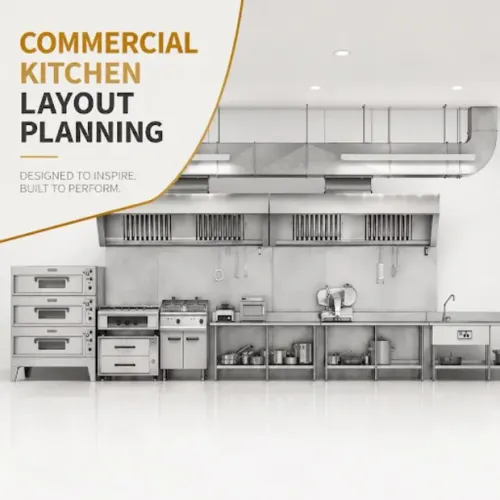
1. Draw the one-way path from receiving and inspection to dry, chilled and frozen storage, preparation, cooking, holding and service. Route dirty returns, refuse and stewarding traffic separately, or raw-food movement will cross plated-food routes.
2. Group outlets by production method. Breakfast, all-day dining and room service can share a hot-production line when their peak cooking periods do not overlap. Banquet kitchens need dedicated staging, holding and dispatch space when large batches must leave together.
3. Reserve dedicated equipment for unique processes or failure-sensitive services. Bakery ovens, pastry refrigeration, halal or allergen-controlled preparation, sushi refrigeration and banquet blast chillers should not compete with general production.
4. Place equipment rooms beside the zones they support. Put refrigeration, water treatment, steam generation, gas controls, electrical panels and exhaust-service access where technicians can reach them without entering clean-food or guest-facing areas.
Shared production reduces duplication but creates a single bottleneck. Dedicated equipment costs more space, utilities and maintenance, yet protects service when demand collides.
| Shared equipment | Dedicated equipment |
|---|---|
| Compatible menus and staggered peaks | Different processes or simultaneous peaks |
| Central prep, common refrigeration, general cooking | Bakery, pastry, blast chilling, allergen control |
| Lower capital and staffing duplication | Higher resilience and independent scheduling |
Record outlet, time block, product, batch size, holding time and recovery time in the equipment schedule. That is the core of hotel kitchen equipment planning in Delhi, not a catalogue count based on room dimensions.
Which Delhi NCR site and utility checks must come before equipment selection
Before choosing equipment, verify the site dimensions, utility capacity, approval limits and service routes. A plan that fits the menu can still fail because the kitchen cannot receive large units, discharge wastewater, extract air or obtain fire clearance.
Check these constraints on site:
- Measure clear ceiling height, door widths, lift dimensions, floor loading, column positions and access for replacement equipment.
- Map potable hot and cold water, peak simultaneous demand, pressure, drainage falls, grease interception, wastewater routes and plant-room capacity. Specify filtration or softening where hard water could damage boilers, combi ovens, dishwashers or ice machines.
- Reserve space for receiving, segregated storage, handwashing, waste movement, cleaning access and pest control. FSSAI Schedule 4 covers hygienic premises, potable water, drainage, ventilation, cleanable surfaces and cross-contamination controls.
- Confirm hood discharge, make-up air, heat rejection, electrical phases, connected load, transformer capacity and emergency power before fixing cooking equipment.
- Identify the governing municipal body, fire authority, pollution-control authority, water and sewer utility, and LPG regulator. NCR includes Delhi plus districts in Haryana, Uttar Pradesh and Rajasthan; Delhi assumptions can fail in Gurugram, Noida, Ghaziabad or Faridabad.
- Coordinate LPG cylinder banks or bulk tanks, manifolds, regulators, isolation valves, detection, ventilation and separation distances with the fire strategy and applicable petroleum and gas-cylinder rules.
| Constraint | Plan that may be invalidated | Check before selection |
|---|---|---|
| LPG versus electric | Hood, transformer or fire design no longer works | Fuel type and input load |
| Low water quality | Boiler, dishwasher or ice machine fails early | Treatment and inlet-water specification |
| Poor access | Replacement requires structural dismantling | Delivery and maintenance route |
| Unbalanced extraction | Smoke, heat or failed fire review | Hood capture and make-up-air test |
Treat commissioning as part of hospitality equipment planning: test gas pressure, electrical load, drainage, refrigeration temperatures, dishwasher final-rinse performance and operator use during a simulated peak service.
How to turn the menu and operating schedule into an equipment specification
A 20-tray combi oven is not a specification until you state the menu, batch size, cook-and-hold time, recovery time and simultaneous load. Translate the operating schedule into demand by period: breakfast à la carte, banquet production, room-service peaks and late-night service each need separate capacity assumptions.
For hotel kitchen equipment selection, compare measured output and full operating cost rather than the catalogue price.
| Equipment | Catalogue comparison | Operating test |
|---|---|---|
| Combi oven | Tray count and purchase price | Run the actual breakfast and banquet menu at peak load; record recovery time, cook uniformity, water use and holding performance |
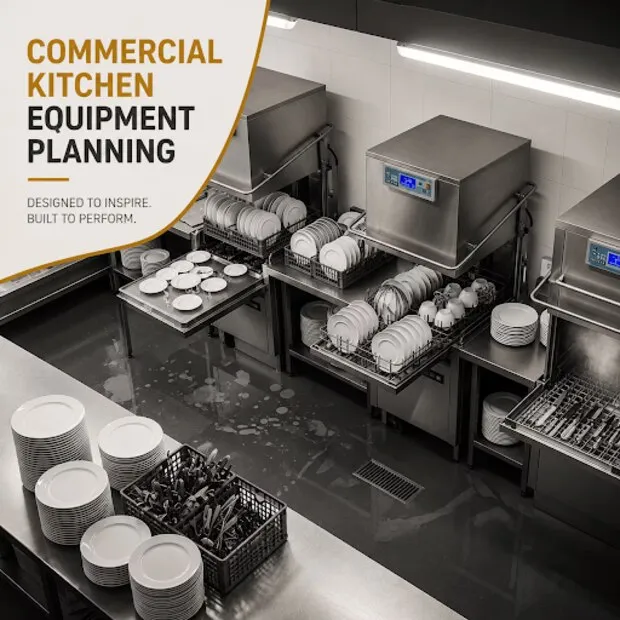
| Dishwasher | Rack capacity and machine price | Measure racks per hour, final rinse temperature, hot-water demand, steam release and cleaning time during the busiest return period |
| Refrigeration | Gross litres and energy label | Check usable storage, temperature recovery after loading, door frequency, drainability and continuous electrical load |
| Cooking line | Burner or element rating | Test output per hour, simultaneous pans, extraction requirement and staff access without crossing clean-food routes |
Request five-year figures for electricity, gas, water, chemicals, filters, planned maintenance and replacement parts. Include technician response time, warranty exclusions and local spare-parts stock; one failed fryer or dishwasher during a wedding can cost more than its purchase-price saving.
A commercial kitchen equipment consultant NCR in Delhi should also test whether staff can clean behind, beneath and inside each unit while preserving FSSAI Schedule 4 hygiene controls. Vinship Restaurant Consultant can use the operating schedule to challenge supplier claims before those assumptions become electrical, HVAC or workflow bottlenecks.
Related products
 | Commercial Kitchen Planning & Design A commercial kitchen is the operational centre of a restaurant, café, hotel or other foodservice business. View product → |
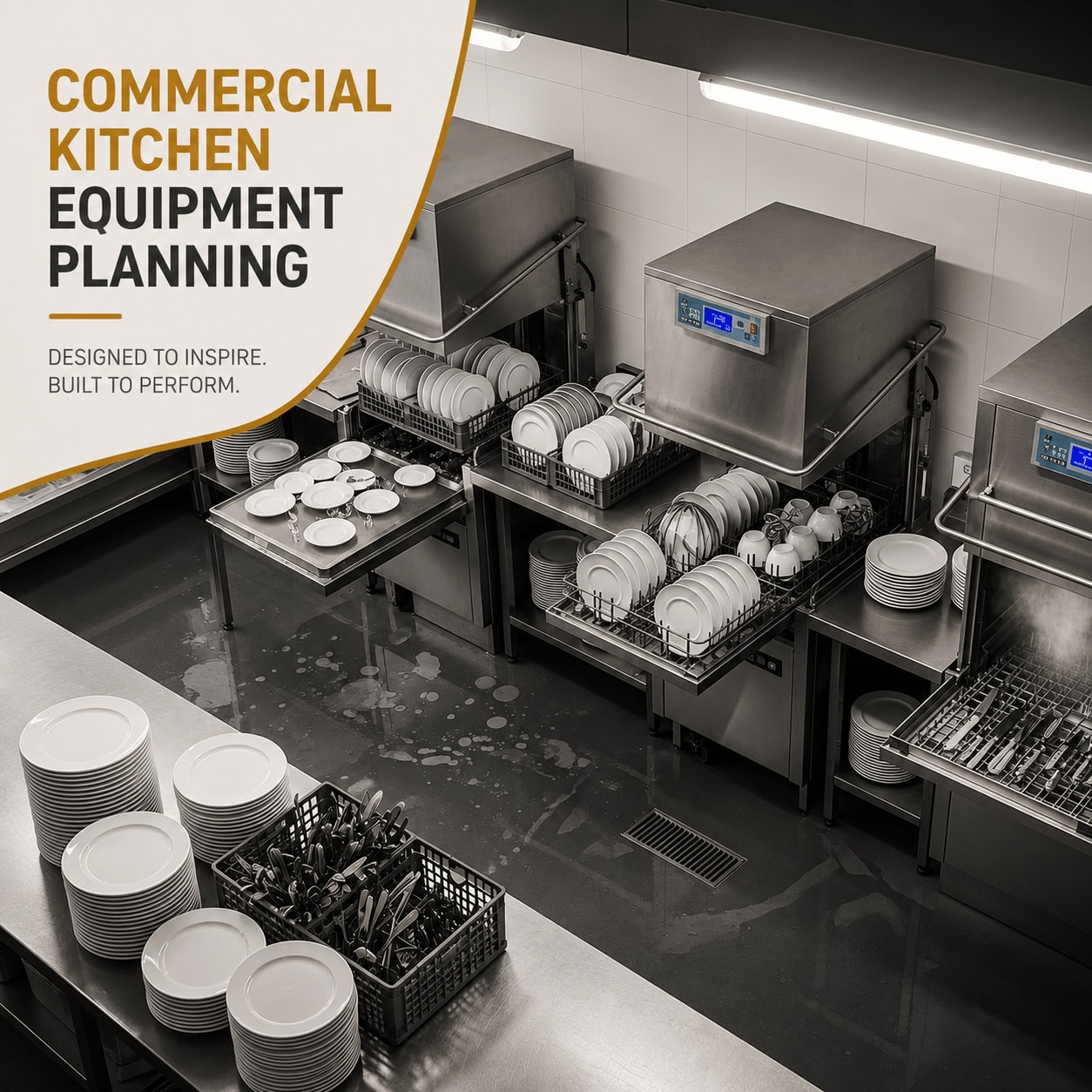 | Commercial Kitchen Equipment Consulting Commercial Kitchen Equipment Planning Kitchen equipment should be selected because the operation needs it, not simply because it is available, familiar or visually appealing. View product → |
How to protect breakfast and banquet service from equipment failure
A failed combi steamer during breakfast can delay banquet mise en place, force menu substitutions and overload every remaining oven. Protect both services by designing for a credible peak, not by buying one large unit and hoping it survives.
1. Specify resilience at the equipment schedule stage. Give critical functions a fallback: two ovens instead of one, separate refrigeration for breakfast and banquet mise en place, and spare hot-holding capacity. Record the consequence of each failure so you know which units need redundancy.
2. Commission the kitchen before opening. Test electrical phase and load, gas pressure, isolation valves and safety shut-offs, water pressure and temperature, drainage, refrigeration temperatures, dishwasher final-rinse temperature, hood capture and make-up-air balance. Check clearances and run a simulated peak breakfast beside banquet production.
3. Make serviceability a selection criterion in hospitality equipment planning. Confirm local spare-parts stock, technician response time, preventive-maintenance access, drainability, cleaning access and warranty exclusions. A cheaper appliance with a three-day repair can cost more than a costlier unit when it disrupts a wedding or breakfast buffet.
4. Train operators during commissioning, not after handover. Test loading patterns, preheating, holding times, cleaning cycles and safe shutdowns, then record settings and escalation contacts. Keep food, dirty returns and waste on separate movement paths so a blocked stewarding area does not stop clean production.
Frequently asked questions
Why can’t hotels size kitchen equipment from average daily covers?
Average covers hide overlapping demand. Size the kitchen around the busiest 30-minute window, including breakfast, banquets, room service, staff meals and mise en place happening together.
How should hotel outlets be mapped into kitchen production zones?
Map receiving, dry and cold storage, vegetable and meat preparation, cooking, bakery, plating, dispatch, warewashing and waste routes. Keep raw-food, clean-food and return paths separated.
Which site and utility checks come before hotel kitchen equipment selection in Delhi NCR?
Confirm floor loading, service access, ceiling height, drainage gradients, grease-trap location, exhaust discharge, electrical load, water pressure, LPG or piped-gas availability and generator capacity.
How do you convert a hotel menu into an equipment specification?
Translate each menu item into batch size, production time, holding time, cooking method and peak portions. Then specify capacity, recovery time, power or gas demand, footprint and backup requirements.
How can hotels protect breakfast and banquet service from equipment failure?
Identify single points of failure and provide redundancy for critical refrigeration, hot holding, cooking and dishwashing capacity. Keep tested spares, preventive-maintenance schedules and manual fallback procedures.
Related products
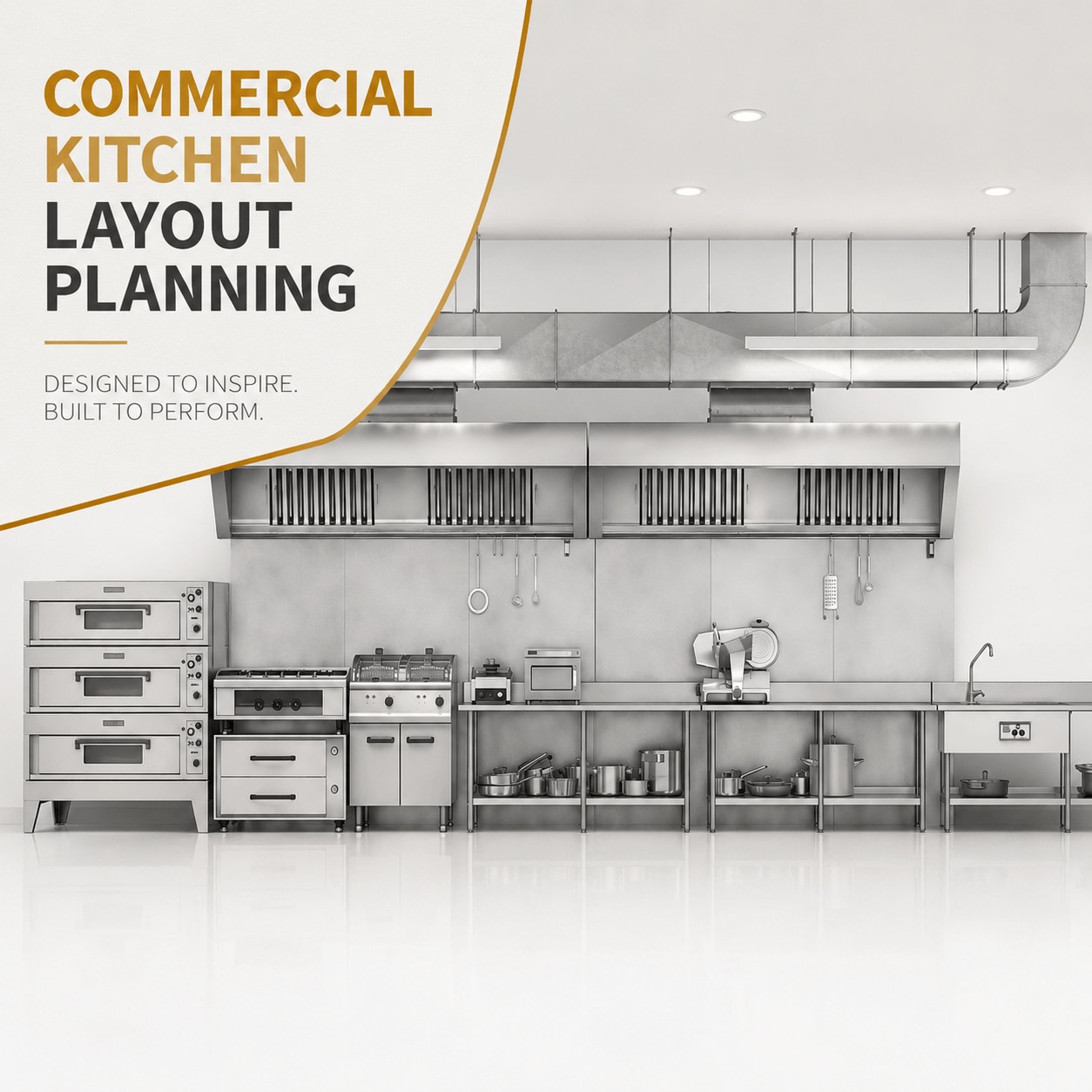 | Commercial Kitchen Planning & Design Commercial Kitchen Layout Planning A good kitchen layout determines how people, ingredients, equipment, prepared food and waste move through the working environment. View product → |
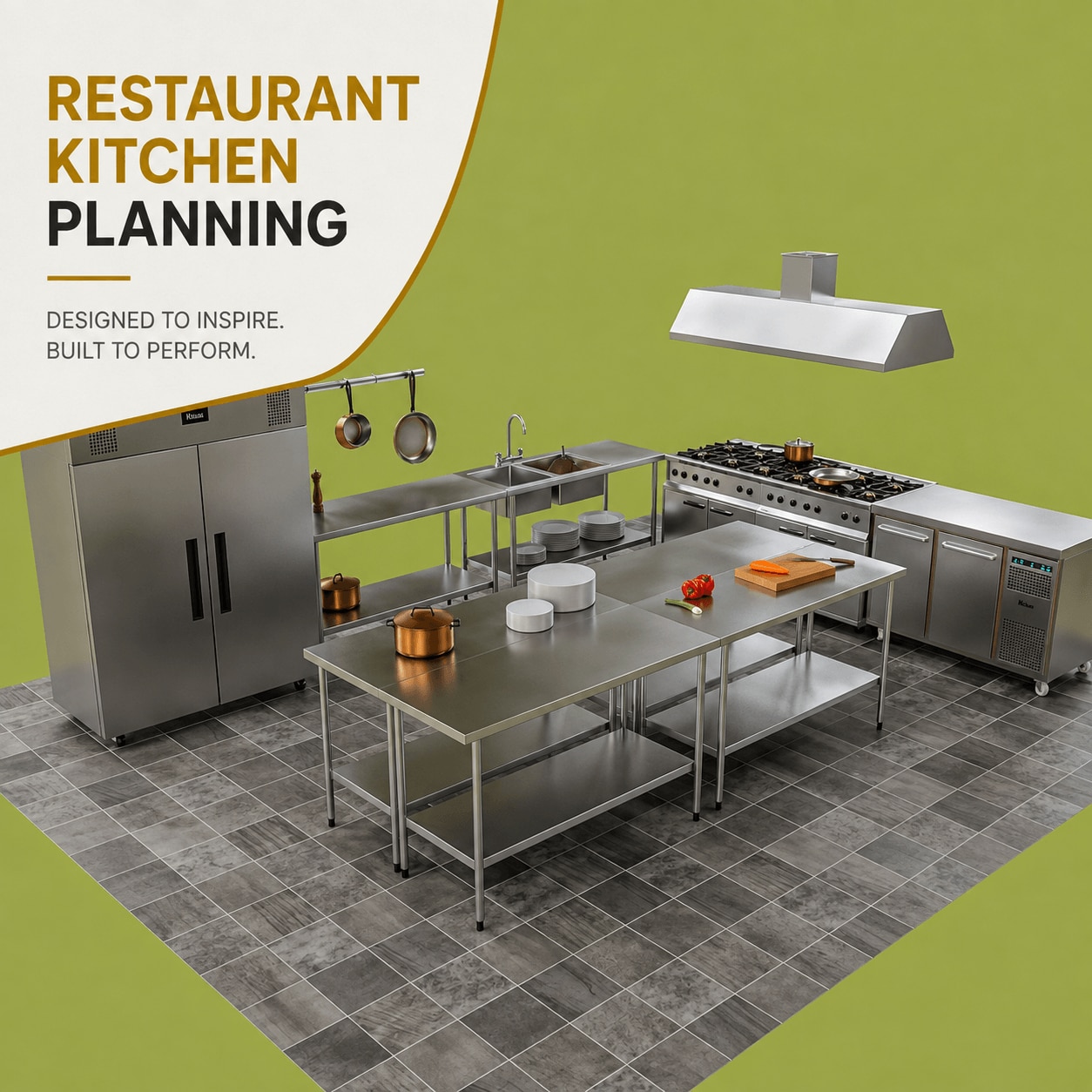 | Commercial Kitchen Planning & Design Restaurant kitchens have to serve two businesses at the same time: food production behind the scenes and customer service at the front. View product → |
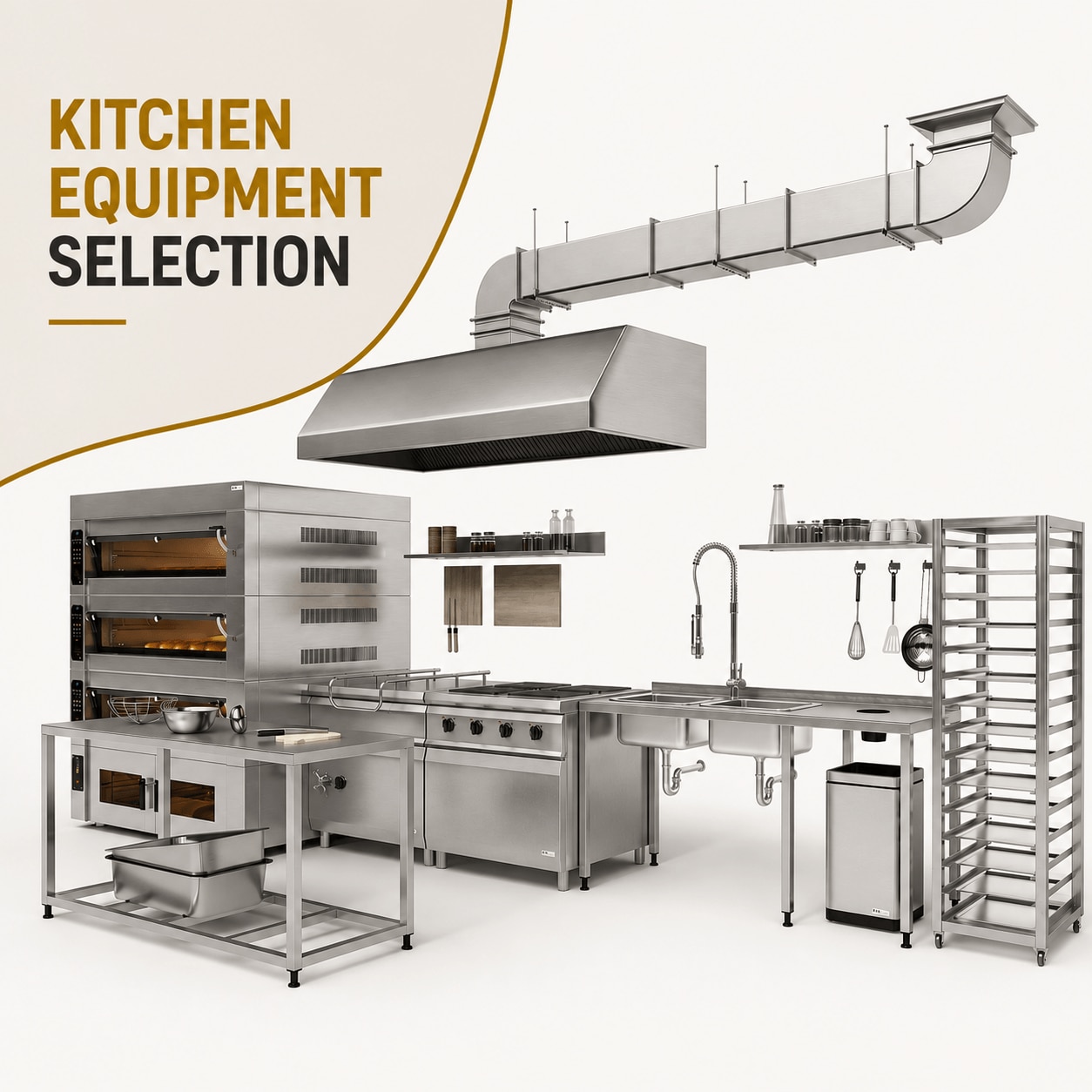 | Commercial Kitchen Equipment Consulting Once the equipment requirement has been established, the next challenge is deciding what equipment is actually appropriate. View product → |
 | Hospitality & Institutional Consulting Hotel food and beverage operations operate within a more complex environment than many standalone restaurants. View product → |