A hospital kitchen must protect diet accuracy, food safety, delivery reliability and operating cost at the same time. By the end, you will know what a consultant should assess, which documents and controls to demand, how to compare operating models, and what the hospital must prepare before implementation.
Key takeaways
- Separate therapeutic diets, texture levels and allergy alerts on every meal ticket.
- Use two patient identifiers before tray delivery and record rejected or returned trays.
- Size production, refrigeration and dishwashing equipment from patient-day demand.
- Demand HACCP records, vendor controls, temperature logs and measurable service standards.
What should a hospital foodservice consultant cover?
1. Define the complete service, not just the kitchen: production kitchen and pantry layout; patient therapeutic and texture-modified meals; formula or enteral-feed preparation where applicable; staff cafeteria, visitor dining and room-service delivery; purchasing, stores, tray collection, dishwashing, waste and vendor management.
2. State the operating model before requesting proposals. A new kitchen needs workflow design, capacity calculations and equipment specifications. An operating kitchen needs corrective action for congestion, hygiene, staffing, rework or service failures. An outsourced catering service needs contract scope, staffing responsibility, performance measures, contingency cover and handover controls.
3. Require a Delhi NCR site survey recording bed count, occupancy, meal rounds, shift pattern, kitchen-to-ward distances, lift routes, satellite locations and traffic constraints. The survey must map raw, cooked, clean-tray, dirty-return, waste and staff movement instead of assuming one model fits every hospital.
4. Specify measurable deliverables: drawings, operating assumptions, staffing plan, equipment and supplier specifications, approved menus, recipe and yield cards, SOPs, cleaning matrices, emergency menus, training records, trial runs, audit tools and handover records.
A brief for hospital foodservice consulting services ncr in delhi should also define meal-order accuracy, delivery timeliness, temperature compliance, missed meals, substitutions, complaints and plate waste.
5. Name exclusions: a standalone dietitian assignment, infection-control audit, statutory licence application, equipment repair and contract dispute. Budget access and working time from administrators, dietitians, nurses, infection-control personnel, purchase, engineering, housekeeping and catering teams; without their records, observations and trials, the proposal is guesswork.
How do you prevent the wrong meal reaching the wrong patient?
A wrong meal is a patient-safety failure, even when the recipe is nutritionally correct. Use this controlled chain:
1. At admission, record the prescribed diet, allergy or intolerance, texture, religious or cultural preference, fasting status and nil-per-mouth (NPO) order. Repeat the check after every diet change and late admission, then update the meal census and alert the dietitian, nurse and kitchen through a documented escalation route.
2. Link the order to the approved menu, diet-code chart, recipe card, production sheet and meal ticket. Define diabetic carbohydrate portions, renal potassium, phosphate and protein limits, low-sodium recipes, liquid consistency and NPO stop rules.
Specify IDDSI drinks 0–4 using the 10 mL syringe flow test, and foods 3–7 using fork-pressure, spoon-tilt or bite-sized tests named in the recipe card.
3. Mark allergens clearly on the allergen matrix and ticket. Use separate utensils or dedicated equipment for allergen production, control substitutions through dietitian approval, and record the replacement batch.
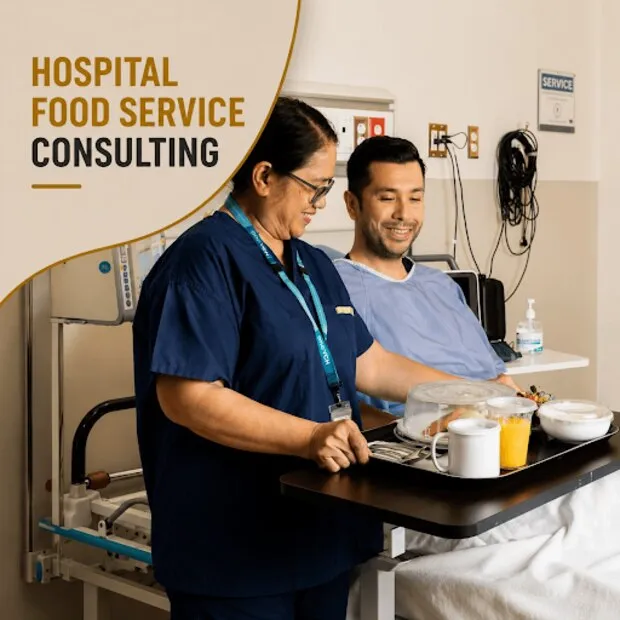
4. During cooking, plating and tray assembly, match the ticket to the tray and patient identifier. Check the tray before trolley loading, dispatch, ward handover and bedside delivery; ask the patient to state their name and date of birth against the wristband or chart. Record collection, return trays and dishwashing segregation.
5. Track meal-order accuracy, missed meals, substitutions, delivery timeliness, temperature compliance, complaints and plate waste as separate measures. Review menu acceptance, fasting, feedback and nutrition escalation so variety improves intake without increasing picking errors.
This workflow is a core deliverable in healthcare foodservice consulting.
Which production model, capacity and equipment fit the hospital?
Choose the production model only after verifying bed count, occupancy, meal-census variation, service rounds, ward distance, shift pattern and recovery time after disruption.
| Model | Best fit | Main trade-off |
|---|---|---|
| Cook-serve | One hospital with a nearby kitchen, stable rounds and enough space | Lower chilling investment, but congestion and overtime rise during peaks |
| Cook-chill | Multi-site groups or satellite wards along Delhi NCR traffic corridors | Requires blast chilling, cold storage, validated reheating and faster dispatch control |
| Cook-freeze | Remote satellites needing long disruption recovery time | Strong resilience, but higher freezer capacity, packaging cost and quality risk |
| Central production | Several hospitals sharing menus, purchasing and specialist equipment | Efficient scale, but traffic, lift limits and dispatch delays can defeat the saving |
| Outsourced catering | Limited kitchen space or a hospital lacking trained production staff | Transfers labour and equipment responsibility, not clinical diet, food-safety or service oversight |
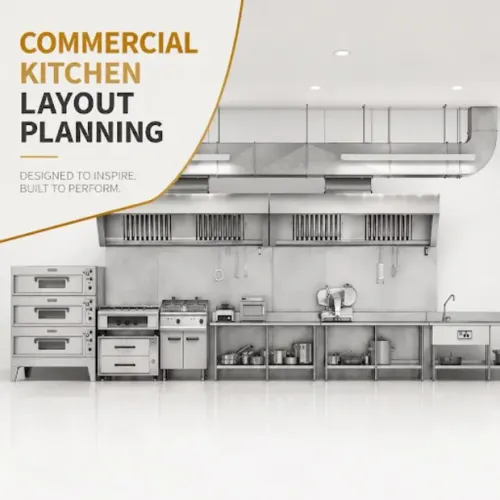
A hospital kitchen consultant in New Delhi must calculate meals per round, batch size, recipe yield, trayline speed, blast-chiller capacity, cold and dry storage, trolley quantity, lift capacity, dispatch time, dishwashing throughput and generator load.
Specify combi-oven capacity, blast-chiller pull-down performance, hot-holding cabinets, tray-sealing systems, dishwasher racks per hour, grease traps, exhaust airflow, refrigeration volume and generator starting load.
Map raw-to-cooked, clean-to-dirty, waste and staff routes. If walls cannot separate them, use time-based separation with cleaning verification and documented release before the next activity.
Compare capital cost with labour, congestion, rework, utilities, overtime, spoilage and food-safety risk. A cheaper layout can become the costliest after one blocked lift or failed chiller.
Which documents, compliance controls and service measures are essential?
A hospital foodservice consultant in Delhi should specify an operating control system, not merely recipes and drawings. Require approved menus, standard recipe and yield cards, an allergen matrix, diet-code chart, meal census, production sheet, receiving checklist, temperature log, cleaning schedule, corrective-action log and lot-level traceability records.
Record chilled food at 5°C or below and hot holding at 60°C or above. Cool food from 60°C to 21°C within two hours, then from 21°C to 5°C within four more hours; reheat to at least 74°C when the process requires it.
Require FSSAI licensing, Schedule 4 hygiene practices, a documented FSMS and FoSTaC supervision of at least one trained food-safety supervisor for every 25 food handlers or part thereof. Include state pollution-control and fire requirements, biomedical-waste boundaries, NABH-aligned infection-control expectations and the hospital quality system.
| Control type | Examples | Verification |
|---|---|---|
| Prerequisite programme | Hygiene, cleaning, pest control, water safety, maintenance, suppliers and segregation | Observation and records |
| HACCP critical control point | Cooking, cooling, reheating or holding limits | Measured limits and corrective action |
Audit thermometer calibration, cleaning verification, pest trends, risk-based environmental testing, mock traceability and corrective-action closure. Measure meal-order accuracy, delivery timeliness, temperature compliance, diet substitutions, missed meals, complaint closure and plate waste separately.
Document plans for water interruption, power failure, refrigeration breakdown, kitchen closure, recall, outbreak and vendor failure.
How should you choose a consultant or catering partner?
Choose the proposal that exposes its assumptions, not the one with the lowest fee. Ask for verified healthcare references and a named dietitian and food-safety lead, then require these deliverables:
- Site-survey findings, equipment drawings and capacity calculations
- FSMS and HACCP approach, commissioning schedule and handover plan
- Staff rosters, training records and preventive-maintenance schedule
- Emergency menus, supplier specifications, audit tools and post-opening reviews
Price the operation from recipe yield, edible portion, therapeutic-diet cost, tray cost, labour per meal, disposables, utilities, wastage and contractor charges. Require forecasts that change with admissions, discharges, diet changes and emergency cases; a flat meal count hides the staffing and production capacity you will actually need.
For an outsourced model, compare the operating obligations in writing:
| Dimension | Questions to test |
|---|---|
| Menu control | Who approves therapeutic menus, substitutions and diet changes? |
| Staffing | Who recruits, replaces and supervises each shift? |
| Infection control | Who owns hygiene breaches, isolation requirements and corrective action? |
| Contingency cover | What happens during power loss, equipment failure, vendor failure or kitchen closure? |
| Service levels | What are the targets for meal accuracy, delivery time, temperature, complaints and missed meals? |
| Contract remedies | What evidence triggers credits, penalties or termination? |
Confirm that your hospital can provide census data, staff access, survey time, tasting trials, training attendance and named implementation owners. Vinship Restaurant Consultant is a sensible fit when these decisions need one accountable plan; choose a dietitian, licensing specialist, auditor, repair contractor or legal adviser when that is the only problem.
Related product
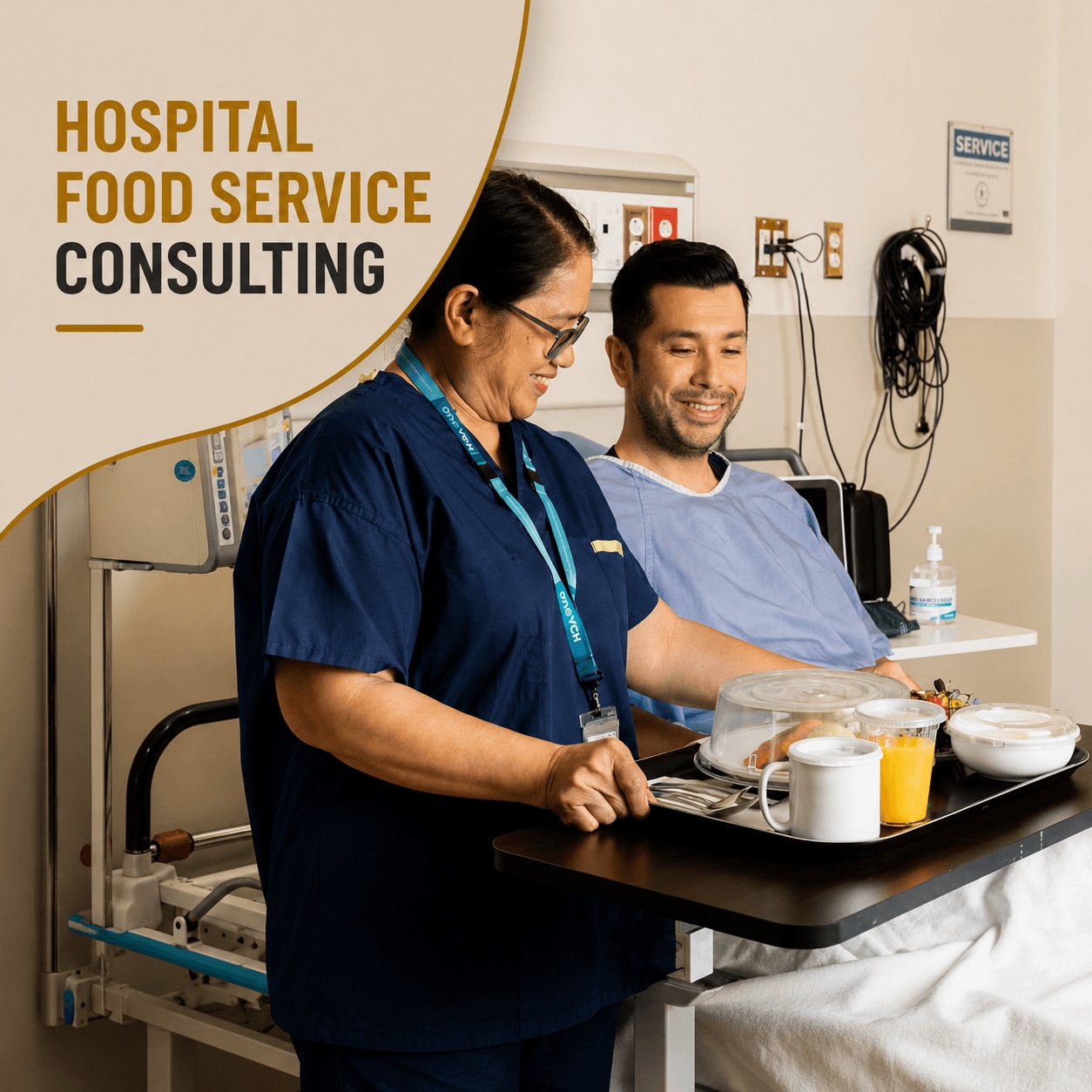 | Hospitality & Institutional Consulting Hospital Foodservice Consulting Hospital foodservice has requirements that extend beyond conventional restaurant operations. View product → |
Frequently asked questions
What should a hospital foodservice consultant cover?
The scope should include kitchen and pantry layout, therapeutic and texture-modified meals, enteral-feed preparation where applicable, staff and visitor dining, room service, purchasing, stores, tray delivery and collection, dishwashing, waste and vendor management.
How do you prevent the wrong meal reaching the wrong patient?
Use two patient identifiers, a current diet order, allergy and texture alerts, a printed or electronic meal ticket, tray-to-order checks and a documented handover at delivery.
Which production model, capacity and equipment fit a hospital?
Compare cook-serve, cook-chill, cook-freeze and hybrid models against patient-day volume, peak meal demand, menu complexity, available space, staffing and delivery distances. Size ovens, blast chillers, refrigerators, hot holding, dishwashing and transport equipment from those figures.
Which documents, compliance controls and service measures are essential?
Require approved recipes, allergen and therapeutic-diet matrices, HACCP plans, cleaning schedules, temperature logs, receiving records, supplier documents, staff training records, incident reports and measures for tray accuracy, delivery time, food temperature, waste and patient satisfaction.
How should you choose a consultant or catering partner?
Check hospital references, named project deliverables, experience with therapeutic diets and patient identification controls, commissioning support, staff training, reporting methods and clear responsibility for compliance, procurement and day-to-day operations.