A menu price built from an invoice total can still lose money when trimming, cooking loss, labour, packaging, discounts, and unsold food are missing. By the end, you will know which calculations, documents, tests, and review controls a consulting engagement should deliver for restaurant, hotel, hospital, and institutional menus.
Key takeaways
- Request recipe cards with yields, portion sizes, and current supplier prices.
- Separate ingredient cost, prime cost, and fully loaded cost.
- Test prices against contribution margin, demand, and kitchen capacity.
- Use tender rules, nutrition targets, and procurement cycles for institutional menus.
What does food costing and menu pricing consulting deliver?
Food costing and menu pricing consulting converts recipes, supplier prices, operating costs, demand, and service constraints into defensible selling prices and practical controls. The engagement should show three different cost views, because one percentage cannot explain every dish.
| Cost view | Includes | Decision it supports |
|---|---|---|
| Ingredient cost | Recipe inputs such as food, beverages, garnishes, sauces, and oils | What one recipe consumes |
| Controllable plate cost | Ingredient cost plus kitchen consumables, packaging, and production labour | What each sale costs the operating team |
| Fully loaded operating cost | Controllable cost plus labour, utilities, occupancy, equipment, delivery, and administration | Whether the item supports the whole operation |
A food-cost percentage alone can understate a low-volume, labour-intensive dish: a small ingredient bill does not capture specialist preparation, long ticket time, or unused capacity. The consultant must document portion, yield, waste, labour, allocation, demand, tax, and service assumptions instead of presenting one unexplained selling price.
Expect these work products:
- Standard recipe cards with yield and portion standards
- A dated supplier price master
- Recipe-costing sheets
- A menu-item profitability report
- Recommended price bands
- Variance thresholds
- An update calendar assigning responsibility for price, recipe, yield, and selling-price reviews
The calendar matters because a correct model becomes unreliable after a supplier change or recipe substitution unless someone updates it and records the effective date.
How is each recipe converted into an edible-portion cost?
Each recipe becomes an edible-portion cost by converting the supplier’s pack price into a usable unit, applying yield and waste, and dividing the resulting cost across the batch yield. The core calculation is: edible-portion cost = as-purchased cost ÷ usable yield.
The costing sheet must show:
- Ingredient name
- Purchase unit
- Pack price
- Pack quantity
- Quantity used
- Yield
- Waste allowance
- Unit cost
- Extended cost
- Portion size
- Batch yield
- Portion cost
- Recipe total
Convert cases, tins, sacks, and bottles into grams or millilitres before calculating unit cost. Record the supplier, quote date, and unit-conversion rule; otherwise a different pack size or a new price can silently distort the recipe.
Yield must reflect trimming, peeling, bones, cooking loss, and rejected product. A 10-kilogram purchase does not produce 10 kilograms for service if skins, bones, damaged pieces, or moisture loss reduce the usable quantity. Batch yield then determines how much each serving costs.
Cost composite recipes separately, including sauces, stocks, marinades, doughs, breading, frying oil, garnishes, and beverage accompaniments. Add the sub-recipe cost to the final dish instead of treating it as free.
Theoretical cost comes from standard recipe usage multiplied by the sales mix. Actual cost is opening inventory plus purchases minus closing inventory. A gap between them points to over-portioning, substitutions, spoilage, theft, unrecorded meals, or incorrect sales counts; changing the menu price will not fix weak stock control.
What costs belong in the foodservice menu pricing process?
A dish costing Rs 180 starts at Rs 600 when the target food-cost percentage is 30%: Rs 180 ÷ 0.30. That is a starting price, not an automatic approval.
1. Collect comparable supplier quotes. Convert cases, tins, sacks, and bottles to INR per kilogram, litre, or edible portion. Record the supplier, quote date, freight, delivery, and whether applicable taxes are included.
2. Standardise each recipe with purchase unit, pack price, quantity used, yield, waste allowance, unit cost, extended cost, portion size, batch yield, portion cost, and recipe total. Cost sauces, stocks, marinades, doughs, frying oil, garnishes, bread, condiments, and beverage accompaniments separately.
3. Calculate edible-portion cost as as-purchased cost ÷ usable yield. Record trim loss, preparation waste, expired stock, returned plates, production overage, and unsold buffet or trayline food separately; each points to a different remedy.
4. Add omitted variable costs: complimentary items, packaging, delivery fees, staff meals, discounts, service charges, and payment commissions. Compare theoretical cost from recipe usage and sales mix with actual cost: opening inventory + purchases − closing inventory.
5. Set the target food-cost percentage, then test the proposed selling price against demand, taxes, service charges, portion size, labour, throughput, and actual operating conditions. Food-cost percentage = food cost ÷ selling price; gross profit = selling price − food cost.
6. Review contribution margin before approval. Contribution margin = selling price − assigned variable cost; prime cost = food cost + direct labour. Approve the final menu only after confirming currency contribution and operational feasibility, not percentage alone.
How are prices tested against margin, demand, and kitchen reality?
A price that meets the target food-cost percentage can still fail if customers reject it or kitchen execution destroys its contribution. Test the proposed price against demand and capacity before approving it.
Compare two measures. Contribution per sale equals selling price minus variable cost. Forecast contribution equals contribution per sale multiplied by expected units sold, showing the cash available for fixed costs and profit.
Classify each item by popularity and contribution:
| Category | Popularity | Contribution | Typical response |
|---|---|---|---|
| Stars | High | High | Protect availability and promote |
| Plowhorses | High | Low | Test portion, recipe, or price changes |
| Puzzles | Low | High | Improve placement, description, or staff recommendation |
| Dogs | Low | Low | Rework, replace, or remove |
A plowhorse does not automatically need a price increase. A puzzle does not automatically need a discount; customers may simply fail to notice or understand it.
If the price is impractical, check these options:
- Adjust the portion without damaging perceived value.
- Substitute ingredients while preserving the dish’s identity.
- Reposition the product for a different occasion or menu section.
- Accept a lower margin for a strategic item after checking the menu mix it supports.
Also test ticket time, specialist labour, bottlenecks, unreliable ingredients, waste, spare capacity, and premium-item anchoring. A high-margin item is not automatically a good item if it consumes scarce labour or delays every ticket behind it.
What changes for hospitals, institutions, and Delhi procurement?
A hospital menu pricing consultant must define the costing unit before recommending a price. Choose cost per patient day, meal served, occupied bed day, tray, therapeutic diet, or staff and visitor meal; mixing produced meals with served meals hides census changes, tray returns, leave meals, and ward wastage.
| Costing unit | Pricing or budget decision | What goes wrong if mixed |
|---|---|---|
| Patient day | Daily food provision for one admitted patient | Package-rate performance disappears |
| Meal served | Cost of the meal actually issued | Production overage looks like demand |
| Occupied bed day | Hospital-wide food cost against occupancy | Empty beds distort the result |
| Tray | Assembly, plating, delivery, and return cost | Ward-level waste remains invisible |
| Staff or visitor meal | Cafeteria or employee-meal selling price | Retail and subsidised funding rules blur |
Separate patient, staff, visitor, contract, and subsidised meals. A patient package rate is not a cafeteria selling price. Cost regular, therapeutic, texture-modified, allergen-controlled, fortified, paediatric, and culturally specified diets separately because ingredients, labour, plating, and wastage differ.
For a food costing consultant in Delhi, compare wholesale markets, distributors, imported products, and contracted suppliers in INR per kilogram, litre, or edible portion. Record whether each quote includes tax, freight, and delivery, then document seasonal substitutions and their yield effects.
Vinship Restaurant Consultant can convert this analysis into dated price masters, recipe controls, profitability reports, approval rules, and a review cadence. Assign named owners for supplier prices, recipes, yields, selling prices, and variance reports after every procurement or menu change.
Related products
 | Menu Engineering & Food Costing Food cost is one of the fundamental commercial considerations in foodservice. View product → |
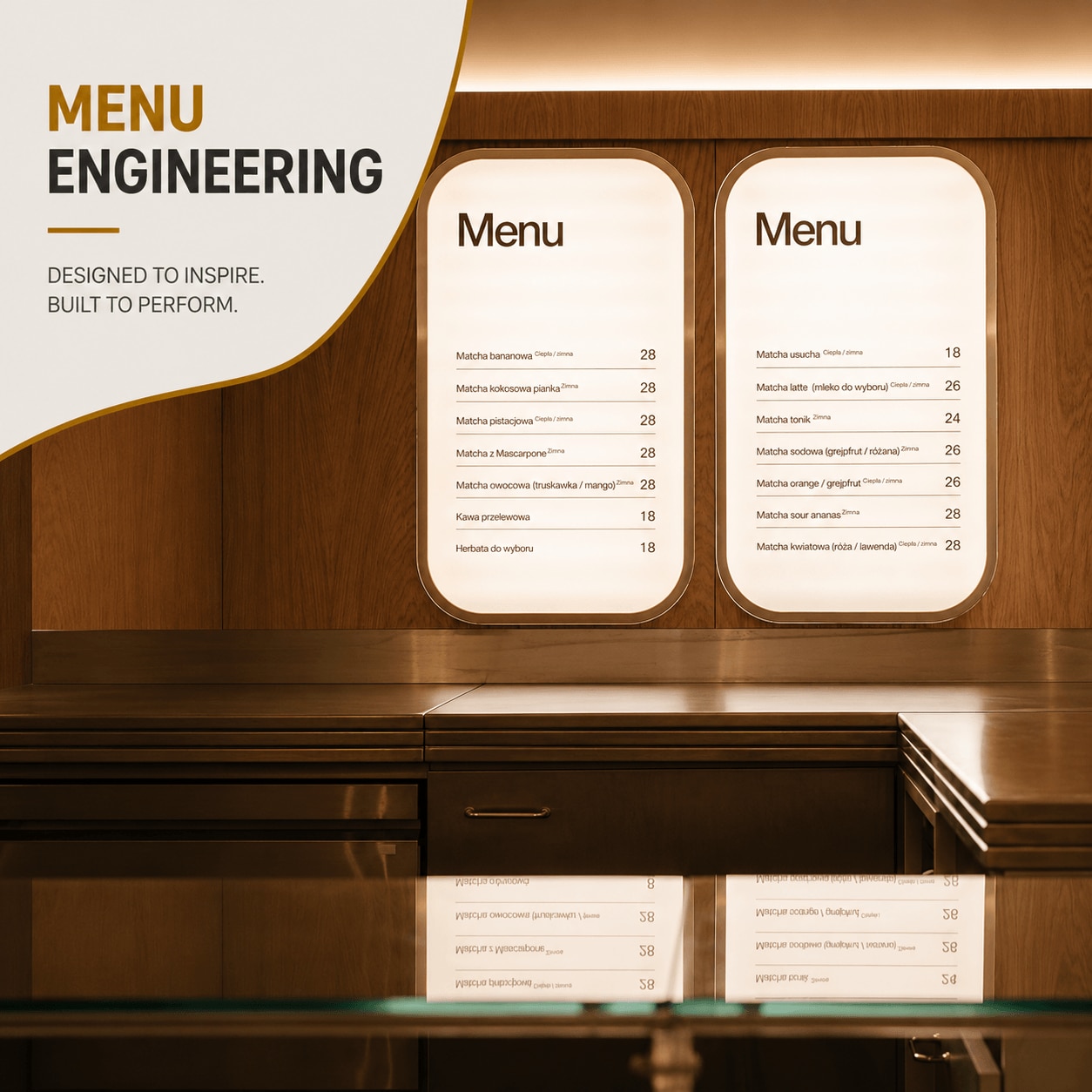 | Menu Engineering & Food Costing A restaurant menu is both a customer-facing offering and a commercial operating tool. View product → |
Frequently asked questions
What does food costing and menu pricing consulting deliver?
It should deliver standardised recipe cards, edible-portion costs, cost-view reports, recommended prices, margin tests, and operating controls.
How is each recipe converted into an edible-portion cost?
Record purchase units, pack prices, preparation yield, cooking loss, trim waste, and serving size before calculating the cost of the edible portion.
What costs belong in the foodservice menu pricing process?
Include ingredient cost, packaging, labour where relevant, wastage, delivery, commissions, utilities, overhead allocation, and the target contribution margin.
How are menu prices tested against margin and kitchen reality?
Compare proposed prices with contribution margin, customer demand, competitor positioning, production time, equipment limits, and service capacity.
What changes for hospitals, institutions, and Delhi procurement?
Account for dietary specifications, nutrition targets, tender terms, approved suppliers, procurement lead times, GST treatment, wastage controls, and Delhi delivery conditions.