
Commercial kitchen equipment represents a significant part of the investment in many foodservice projects. Yet selecting equipment too early can create problems that are difficult and expensive to correct later.
A commercial kitchen consultant approaches equipment as part of a complete operating system rather than as a collection of individual machines.
This distinction matters for restaurants, hotels, cafés, hospitals, educational institutions, corporate kitchens, and other foodservice facilities throughout Delhi NCR.
Start With Production Requirements
Equipment selection should begin with what the kitchen needs to produce.
Important questions include:
- What dishes will be prepared?
- How many meals are expected during peak periods?
- Which items require advance preparation?
- How much refrigerated storage is required?
- What cooking methods will be used?
- How will dirty utensils move to washing areas?
- How frequently will ingredients arrive?
Without these answers, an equipment list can easily become oversized, incomplete, or unsuitable.
Layout Comes Before Individual Machines
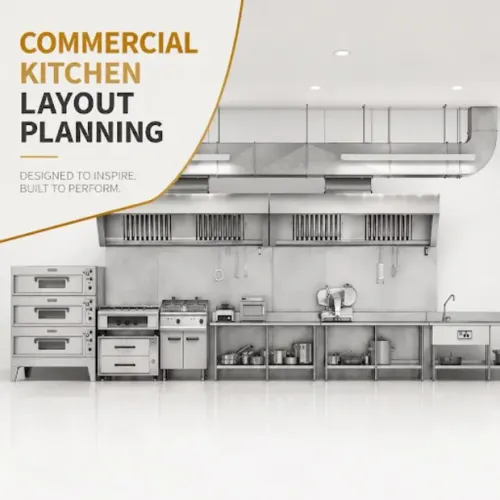
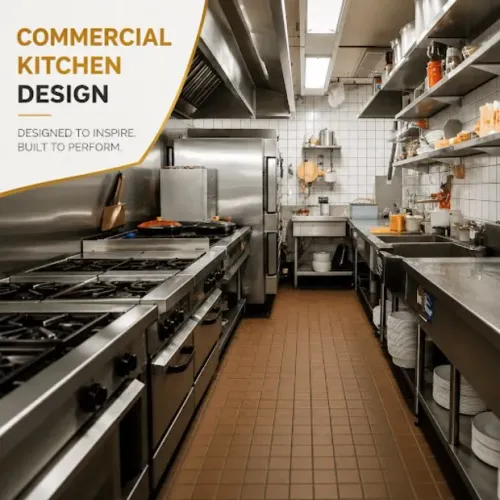
A commercial kitchen has limited usable space. Every piece of equipment occupies not only its physical footprint but also working and maintenance space.
Doors need room to open. Employees need safe circulation. Equipment may require ventilation, drainage, electrical connections, gas, water, or service access.
A commercial kitchen consultant therefore considers how equipment interacts with the layout before finalising specifications.
Utilities Need Early Coordination
Kitchen equipment can place substantial demands on building services.
Electrical loads, gas requirements, water supply, drainage, ventilation, exhaust systems, and air replacement should be coordinated during planning.
If a high-load appliance is purchased without confirming available electrical capacity, additional infrastructure work may become necessary.
The same principle applies to drainage and exhaust requirements.
Bigger Equipment Is Not Automatically Better
Capacity should match realistic production requirements.
Oversized equipment may consume more space, increase capital cost, and use additional energy without creating meaningful operational value. Undersized equipment can create bottlenecks during peak service.
The objective is appropriate capacity.
For a restaurant serving a focused menu, multipurpose equipment may sometimes make better use of space than several specialised appliances.
Think Beyond Purchase Price
Two pieces of equipment with different purchase prices cannot be compared properly without examining specifications, capacity, expected usage, energy requirements, maintenance support, durability, and suitability for the menu.
Vinship Restaurant Consultant supports commercial kitchen planning and equipment consulting for hospitality and institutional projects in Delhi NCR.
The broader lesson is simple. Define production needs and workflow first, develop the kitchen around them, and select equipment only after its operational role is clear.
Keywords