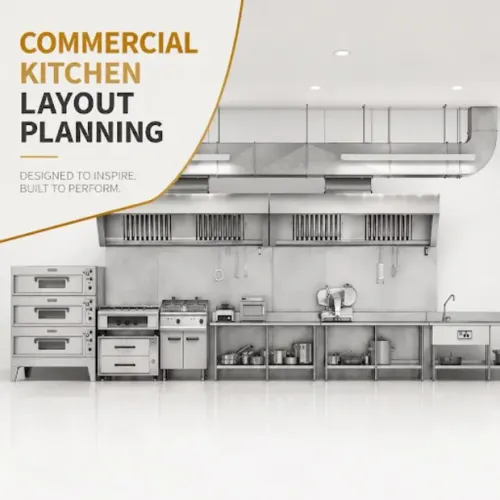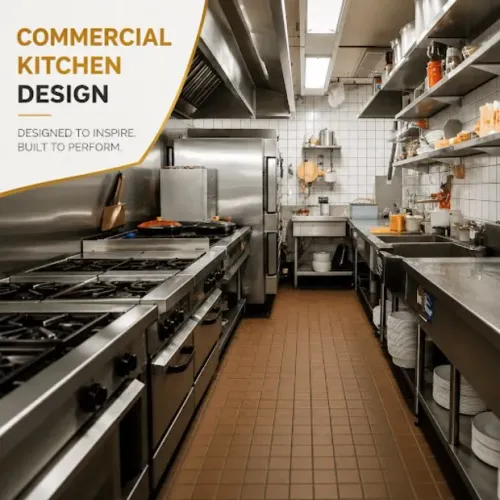
Large-scale food production requires careful planning to maintain efficiency, hygiene, and operational consistency. Professional Industrial Kitchen Designing Services help businesses create facilities capable of handling high production volumes while supporting food safety and efficient workflows.
These services are commonly used for hotels, institutional kitchens, hospitals, food processing units, educational campuses, industrial cafeterias, and large catering operations.
Across Delhi NCR, growing hospitality and institutional projects increasingly rely on specialized industrial kitchen planning during the development stage.
What Makes Industrial Kitchens Different?
Industrial kitchens are designed for continuous, high-volume food production rather than small-scale restaurant service.
Planning generally focuses on:
- Production efficiency
- Large-capacity equipment
- Staff coordination
- Utility management
- Hygiene compliance
- Storage optimization
These kitchens must support demanding operational schedules without compromising food quality.
Core Components of Industrial Kitchen Design
A well-planned facility typically includes:
- Receiving and inspection areas
- Dry storage
- Cold storage
- Preparation sections
- Cooking zones
- Packaging or serving areas
- Cleaning stations
- Waste management systems
Organizing these areas in logical sequence improves workflow and reduces unnecessary movement.
Selecting Suitable Equipment
Equipment should match operational requirements rather than simply maximizing capacity.
Factors to evaluate include:
- Production volume
- Menu complexity
- Energy efficiency
- Maintenance accessibility
- Utility consumption
- Future scalability
Choosing appropriate equipment contributes to smoother operations and better cost management.
Safety and Hygiene Considerations
Industrial kitchens require careful attention to:
- Ventilation
- Fire protection
- Drainage systems
- Food handling practices
- Staff safety
- Equipment spacing
These features help maintain operational standards while supporting regulatory compliance.
Planning for Expansion
Many institutional food facilities increase production over time.
Flexible design allows businesses to:
- Add equipment
- Expand storage
- Increase production capacity
- Introduce automation
- Improve logistics
Planning ahead reduces future renovation expenses.
Working with Experienced Hospitality Professionals
Organizations developing industrial food facilities in Delhi NCR often collaborate with firms such as Vinship Restaurant Consultant to evaluate workflow, equipment selection, operational planning, and large-scale kitchen design requirements.
Industrial Kitchen Designing Services provide the structured planning needed to create facilities that support efficient food production, employee productivity, operational reliability, and sustainable business growth.
Keywords