Opening a restaurant involves far more than choosing a menu, renting a property, and creating attractive interiors. Every decision related to space, kitchen capacity, service style, staffing, equipment, storage, utilities, and customer flow affects how the business will operate after launch.
A restaurant consultant helps bring these decisions together within one practical operating plan. For entrepreneurs entering the food and beverage industry, consulting can provide a structured way to evaluate an idea before significant capital is committed.
In Delhi NCR, this planning becomes particularly important because restaurants operate in many different formats, from compact cafés and quick-service outlets to fine-dining restaurants, hotel kitchens, food courts, cloud kitchens, and institutional foodservice facilities.
What Does a Restaurant Consultant Actually Do
The consultant's role depends on the stage and complexity of the project. For a new venture, work may begin with understanding the concept, expected customers, menu direction, service format, available property, investment range, and operational objectives.
The consultant may contribute to areas such as:
- Concept feasibility
- Restaurant space planning
- Kitchen requirements
- Workflow development
- Equipment planning
- Menu-related operational requirements
- Storage planning
- Service-area coordination
- Utility requirements
- Project implementation
The objective is not simply to make the restaurant look attractive. The space needs to function efficiently when employees, ingredients, equipment, customers, deliveries, and waste are all moving through it.
Why Early Planning Matters
Many expensive restaurant problems begin before construction.
A kitchen may appear large enough on a drawing but become difficult to operate once equipment, preparation tables, washing facilities, refrigeration, and storage are installed.
Similarly, an attractive dining layout may create operational difficulties if servers repeatedly cross busy customer pathways.
Early planning allows these issues to be identified while changes are comparatively easier to make.
The Menu Influences the Entire Restaurant
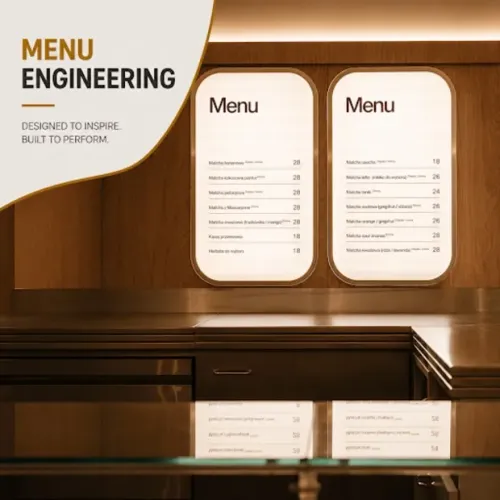
A menu is also an operational document.
Different cuisines and service models require different cooking processes, preparation areas, refrigeration capacity, exhaust requirements, equipment, and staffing patterns.
A bakery café, for example, has different requirements from a North Indian restaurant. A high-volume quick-service outlet operates differently from a premium sit-down restaurant.
This is why kitchen planning should ideally follow a clear understanding of the menu and operating model rather than relying on a generic equipment list.
Understanding the Local Operating Environment
Restaurant development across Delhi, Noida, Gurugram, Ghaziabad, and other parts of the NCR can involve properties with very different physical conditions.
Available power, water, drainage, ventilation possibilities, loading access, building restrictions, and usable floor area can influence project feasibility.
Local planning should therefore examine the actual site instead of assuming that a concept successful at one property can be reproduced unchanged at another.
Vinship Restaurant Consultant works with hospitality and foodservice projects in Delhi NCR across restaurant consulting, kitchen planning, concept development, and project setup.
For entrepreneurs still evaluating an idea, the most important first step is not buying equipment or designing décor. It is establishing whether the concept, property, menu, investment plan, and operating requirements can work together as a commercially practical restaurant.
Keywords