A bar consultant earns the fee only when the advice changes a costly outcome: a rejected site, an unusable bar station, uncontrolled pour cost, a delayed opening or inconsistent service. You will be able to compare the consultant’s role with internal staff and suppliers, select the right engagement, and test whether the expected operational gains justify the spend.
Key takeaways
- Hire before finalising the bar layout, equipment, menu, or staffing plan.
- Buy recipe cards, yield tests, costing sheets, SOPs, and opening support.
- Budget for implementation time, training, wastage, and licence coordination.
- Choose an audit when your bar operates well but needs targeted fixes.
What does a bar consultant actually do, and when do you need one?
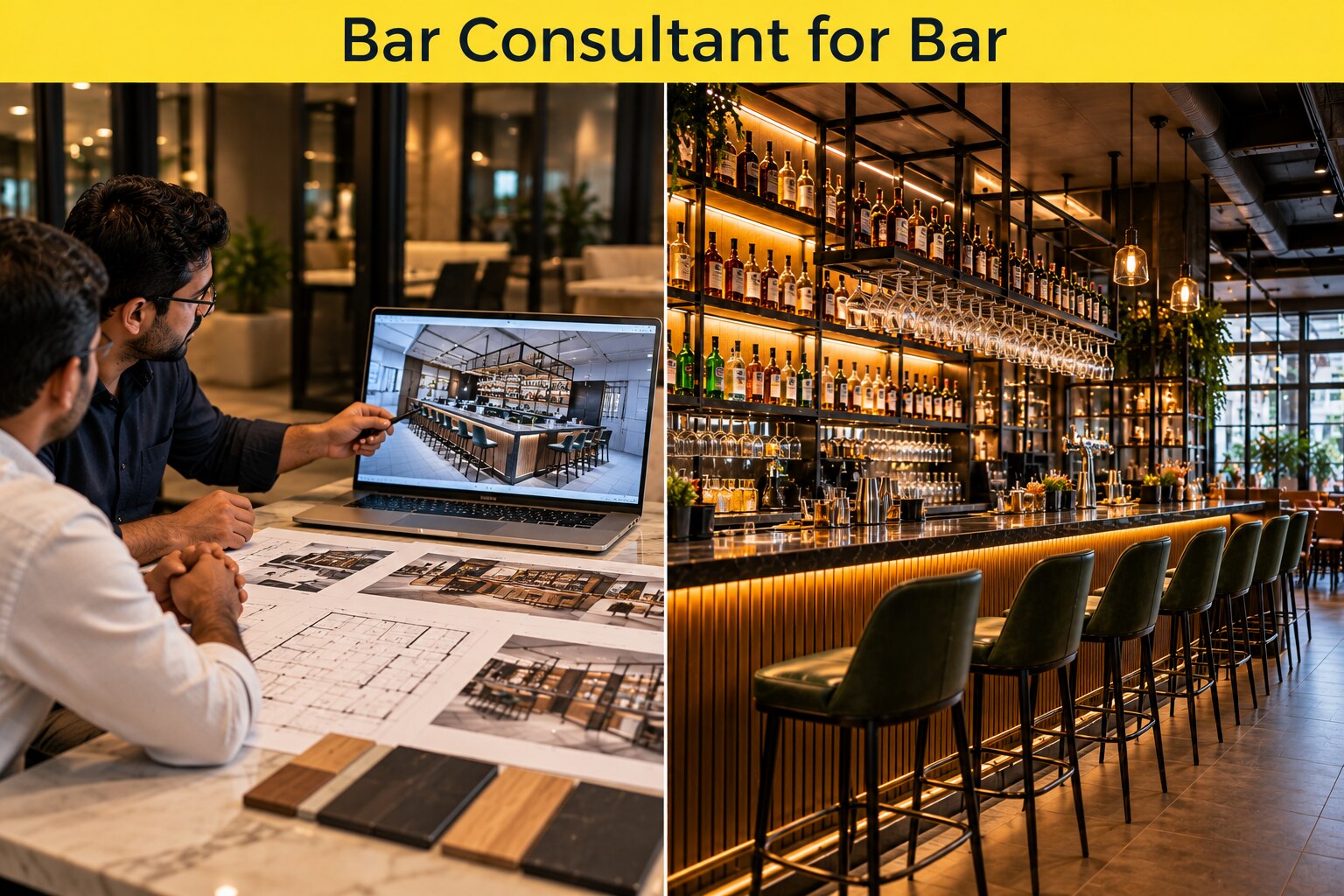
A bar consultant owns the beverage system from commercial concept to opening: positioning the offer, designing the menu, testing recipe yields, writing recipe cards, planning station layout, specifying equipment, setting purchasing controls, costing drinks, hiring and training staff, writing SOPs, coordinating licences and supporting opening service.
An owner supplies the commercial direction but may miss technical capacity and control gaps. A head bartender can build drinks and train a team, yet may lack experience in bar setup, procurement systems, licensing coordination or financial reporting. A beverage supplier can recommend products and demonstrations, but does not provide independent costing or layout advice.
A general restaurant consultant can coordinate the wider project while missing drink-level yield, dilution, pour control and service-station detail. A beverage consultant or bar operations consultant Delhi project should close those gaps.
Hire specialist help if any of these apply:
- The project is new, or the team has never opened a bar.
- You are redesigning the bar, changing the beverage concept or altering service capacity.
- You cannot produce reliable recipe-level costs and inventory reports reconciling stock, purchases, transfers, closing stock and POS sales.
- Drinks vary, tickets run slowly, or wastage and stock variance remain unexplained.
A full engagement is unnecessary when an established bar has a capable beverage manager, documented recipes, stable demand and low variance. Start with a fixed-scope audit of layout, costing, compliance or staff competence before buying broader support.
Which Delhi risks make early bar consulting worth the fee?
A lease can become an expensive mistake if the site cannot support the required Delhi Excise licence category, premises conditions or service hours. Before signing, verify the Delhi bar licence, policy-year fees, dry days Delhi rules, liquor procurement sources and operating restrictions.
| Jurisdiction | What must be checked |
|---|---|
| Delhi | Delhi Excise category, premises eligibility, hours, fees and procurement rules |
| New Delhi | Local building, access and fire conditions alongside the applicable Delhi Excise approval |
| Neighbouring NCR | Separate state excise licence, fees, dry days, hours and purchasing rules |
Do not treat New Delhi and Gurgaon, Noida or Ghaziabad as interchangeable. The minimum legal drinking age Delhi 25 requires an SOP that states when staff check ID, which original documents they accept, the refusal words to use, and when a supervisor or security lead takes over.
Food service brings FSSAI licensing and hygiene controls: receiving temperatures, ice handling, garnish washing, perishable storage, chemical separation, pest-control logs and refrigerator records. Map GST separately for liquor, food, mixers and packaged products; alcoholic liquor for human consumption is outside GST, so one blended tax setting can corrupt invoices.
Coordinate the plan with Delhi Fire Service, building approvals and music permissions before construction. Then run a timed mock service testing:
- Bartender reach, glass storage, ice replenishment and garnish access
- Glass-washing capacity, draught-line position and pickup space
- Simultaneous tickets without cross-traffic or blocked exits
A layout that looks efficient on paper can fail during the first rush. Fixing it before construction ends costs less than moving plumbing, refrigeration or service counters after opening.
Which engagement model and deliverables should you buy?
Buy the engagement that fixes your current failure, not the consultant’s largest package.
| Option | Problem solved | Useful point |
|---|---|---|
| One-time feasibility review | Tests demand, licence, space, capex and operating assumptions | Before lease signing or investment |
| Design-stage appointment | Converts the concept into a workable bar layout, equipment plan and vendor basis | Before drawings and procurement are frozen |
| Pre-opening project | Coordinates purchasing, installation, recipes, hiring, testing and launch | Six to twelve weeks before opening |
| Staff-training package | Builds repeatable pours, service, cleaning and refusal skills | Before opening or after a team change |
| Operational audit | Finds variance, slow tickets, wastage, poor menu mix and control gaps | For an established bar |
| Continuing retainer | Provides recurring menu, compliance, costing and performance support | For multi-outlet or changing operations |
Obtain a written scope covering the bar brief, feasibility assumptions, equipment schedule, bar layout, vendor comparison, procurement rules and implementation calendar. Require beverage costing sheets based on tested yield, recipe cards, opening inventory, approved substitutions, batch-cocktail labels and discard times.
The handover must include training plans with competency checks, opening and closing SOPs, responsible-service procedures, cleaning schedules, variance-review templates and handover criteria. It must also disclose commissions, rebates, free stock and preferred-vendor relationships; separate procurement approval from design advice.
Evaluate Vinship Restaurant Consultant against these deliverables, sample documents and competency tests—not reputation alone. Ask for named outputs, acceptance dates and revision limits before signing.
What does a bar consultant cost beyond the quoted fee?
Bar consultant fees are only the first line in the budget. A low quote becomes false economy when it delivers untested recipes or a one-day product demonstration without competency checks, leaving your team unable to reproduce the drink, hit ticket-time targets or control beverage cost.
Count the engagement in three layers:
- Delivery costs: owner and manager workshop time, recipe testing, tasting sessions, training shifts and menu trials.
- Change costs: procurement changes, equipment revisions, new glassware, ingredients and batch containers.
- Disruption costs: staff replacement during training, lost service capacity and the cost of delaying an opening.
Before changes, record covers, average check, sales mix, beverage gross profit, pour cost, average preparation time, labour hours, wastage and bar inventory variance. Reconcile opening stock, purchases, transfers, closing stock and POS sales at recipe level. Test spirits by bottle weight or calibrated volume, and measure dilution and melt separately.
Separate theoretical bottle cost from actual loss caused by over-pouring, spillage, breakage, unrecorded complimentary drinks, batching loss and recipe changes. Then review the same measures for 30, 60 or 90 days after implementation. Calculate incremental gross profit from additional sales and improved sales mix, then add avoided loss from lower wastage and variance.
Payback equals total engagement cost divided by that combined monthly benefit—not revenue alone. If labour savings depend on batching, include production time, refrigeration, labelling and discard loss in the calculation.
Which warning signs justify hiring—and when is an audit enough?
Commission a full project when repeated stock variance, unexplained pour cost, slow ticket times, inconsistent drinks, excessive wastage, poor menu mix or failed openings point to system failure.
Hire help sooner if cross-traffic blocks the station, key ingredients stock out, or the layout cannot support peak tickets; bar profitability will not recover through staff effort alone.
A proper bar audit starts with beverage inventory control. Reconcile opening stock, purchases, transfers, closing stock and POS sales at recipe level. Check spirits with bottle weights or calibrated volume tests, then separate over-pouring, theft, breakage, wastage, unrecorded complimentary drinks and recipe changes.
- Test procurement continuity, seasonality, SKU rationalisation and written substitution rules.
- Approve batching only when the consultant defines yield, production date, refrigeration, labelling, shelf life and discard time.
- Measure recipe yield, dilution, melt, garnish loss, batching loss and actual preparation time.
| Choice | Observable test | When it applies |
|---|---|---|
| Full project and bar opening support | Systems, layout, menu, procurement and team need rebuilding | New or troubled bar |
| Fixed-scope audit | Controls, recipes, station flow or staff standards need diagnosis | Stable operation showing one defined problem |
| Existing beverage manager | Standards, demand, inventory variance and service times already hold | No redesign, licence change or recurring loss |
An audit is enough when findings are isolated and the manager can implement them. Rely on the manager when controls already produce reliable recipe-level reports and consistent peak service.
Frequently asked questions
What does a bar consultant do, and when do you need one?
A bar consultant builds the beverage system from concept and menu design through recipe costing, equipment planning, staff training, SOPs, licence coordination, and opening support. Hire one before major design, purchasing, or hiring decisions when you lack in-house beverage expertise.
Which Delhi risks make early bar consulting worth the fee?
Early consulting helps you address Delhi licensing coordination, premises and service-flow constraints, equipment selection, purchasing controls, recipe yields, staffing, and opening-service problems before they become expensive rework.
Which engagement model and deliverables should you buy?
Choose a full pre-opening engagement for a new bar, a defined project package for menu or layout work, or an audit for an operating bar with specific problems. Require written deliverables such as recipe cards, yield tests, drink costing, equipment specifications, SOPs, training records, and an opening checklist.
What does a bar consultant cost beyond the quoted fee?
Include staff time for tastings and training, trial ingredients, equipment changes, menu testing, wastage, travel, licence coordination, software or documentation, and implementation work that continues after the consultant leaves.
When is an audit enough instead of a full consulting engagement?
An audit is enough when your bar has an established concept, workable equipment, and trained staff but needs diagnosis of issues such as low margins, inconsistent recipes, slow service, excess wastage, or weak purchasing controls.